
Les banlieues de l'Europe
Les politiques de voisinage de l'Union européenne
First Edition
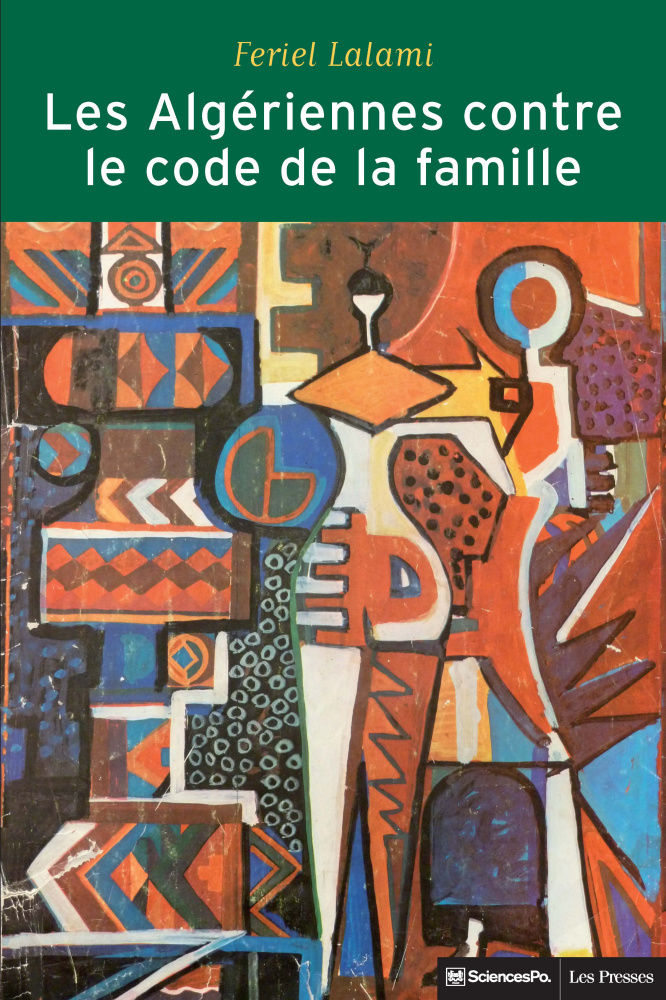
A close account of Algerian women's’ struggle for egalitarian laws governing the family. Read More
Promulgated in 1984, the 'Code de la famille' legalizes a different status between men and women, placing the latter in a position of subordination. Hence, it contradicts the promises of equality between the sexes defended during the fight for independence and proclaimed in the Constitution.
In spite of the obstacles and constraints of the political environment – the weight of the colonial period which reduced the status of women to a stake in national identity, the limits imposed on public freedom by an authoritarian regime, a series of violent events in the 1990s – associations have always succeeded, with pragmatism, in finding new resources, especially at an international level.
The author recalls the various stages of construction of those women’s organizations: the elaboration of their demands, their insertion into a political environment where they are obliged to define their identity, invent a method for their struggle, choose their allies and adversaries and the means of being heard in the political arena.
Both an enlightening and unique view of the history of women in Algeria and a reflection on a feminist movement in an Arab country, this book lets us understand the specificities of their situation and relive, fifty years after Independence, the various stages of democratic construction in Algeria.
Feriel Lalami is a political scientist and doctor of sociology.
Available from this retailer:

Specifications
- Publisher
- Presses de Sciences Po
- Author
- Jacques Rupnik,
- Collection
- Nouveaux Débats
- Language
- French
- Tags
- , Balkans, central and eastern Europe, Enlargement, Europe, NATO, PKK, Turkey
- Publisher Category
- > Europe > European Countries
- Publisher Category
- > Europe > European Politics
- Publisher Category
- > Europe
- Publisher Category
- > International field
- Publisher Category
- > Politics
- BISAC Subject Heading
- POL000000 POLITICAL SCIENCE
- Onix Audience Codes
- 01 General / trade
- CLIL (Version 2013-2019)
- 3283 SCIENCES POLITIQUES
- Credit
- Presses de Sciences Po
- Title First Published
- 05 June 2012
- Subject Scheme Identifier Code
- Thema subject category: Politics and government
Paperback
- Publication Date
- 13 November 2007
- ISBN-13
- 978-2-7246-1044-4
- Extent
- Main content page count : 208
- Code
- 978-2-7246-1044-4
- Weight
- 180 grams
- List Price
- 12.50 €
- ONIX XML
- Version 2.1, Version 3
ePub
- Publication Date
- 13 November 2007
- ISBN-13
- 9782724686692
- Extent
- Main content page count : 208
- Code
- 9782724686692
- Technical Protection ebook
- Adobe DRM
- List Price
- 6.99 €
- ONIX XML
- Version 2.1, Version 3
Google Book Preview
Contents
Chapitre 1 La détermination européenne de l’Ukraine
Le rapport de l’Ukraine « orange » à l’Europe
Le facteur européen dans les changements démocratiques
Quelles perspectives ?
Chapitre 2 La Géorgie, un voisin distant
Une longue quête d’européanité
La Géorgie, un déf i pour l’Union européenne
Chapitre 3 La Moldavie, l’Europe par procuration ?
Une voie roumaine vers l’Europe ?
La Moldavie et l’Europe
La Transnistrie, la Russie et la sécurité européenne
Le paradoxe moldave
Chapitre 4 Les Balkans et la pax europea entre protectorats et intégration
Développer une « communauté de sécurité »
Protectorats, conditionnalité et démocratisation
L’UE et la construction d’États-nations dans les Balkans
Chapitre 5 L’UE et son voisinage en Méditerranée
Le parallélisme Est-Sud
Les logiques de marché dans la politique méditerranéenne
L’Union, promoteur de démocratisation ?
Logique de sécurité et pax americana
Redéfinir le partenariat
Chapitre 6 La Turquie et l’UE à la croisée des chemins
L’UE et l’évolution récente des politiques turques
L’AKP et la nouvelle politique turque
Le rôle de la Turquie dans le contexte régional
Favoriser un nouveau « modèle turc »
Excerpt
Éloge de Vaclav Havel
-
Éloge de Vaclav Havel prononcé par Jacques Rupnik lors de la remise du Doctorat Honoris CAusa de Sciences Po