
Le boycott
First Edition
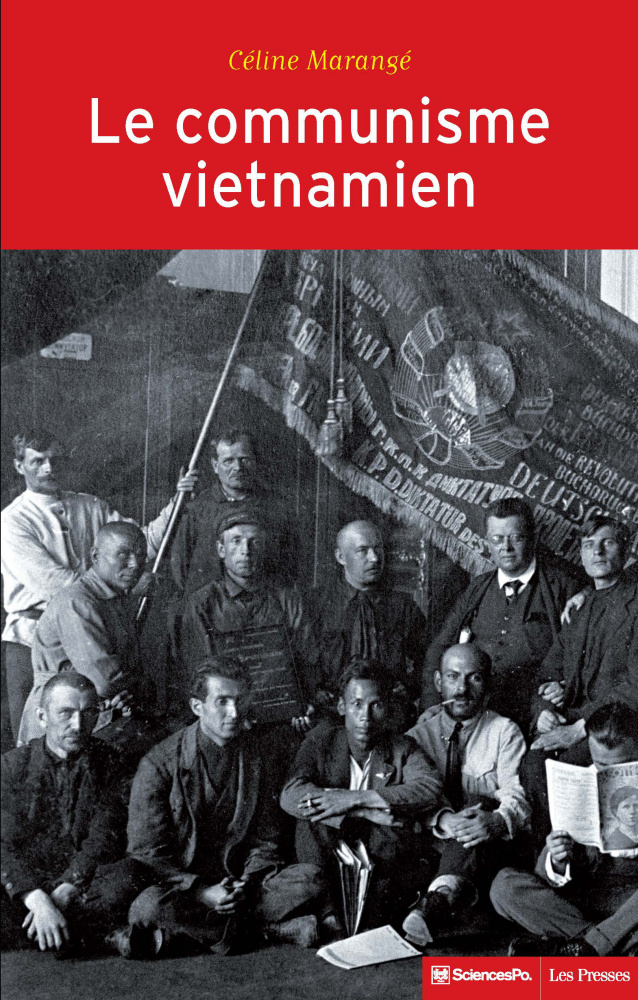
How did Vietnamese Communists succeed within 50 years in overthrowing colonial rule, keeping the American army at bay and conquering the South in 1975? The first exhaustive study on Vietnamese communism in over 30 years ! Read More
In 50 years, Vietnamese Communists succeeded in overthrowing colonial rule, then in keeping the American army at bay and conquering the South in 1975.
Although they persistently drew their inspiration from Soviet and Chinese models of power conquest and organization of social and political life, Vietnamese communists managed nevertheless to forge an autonomous path – founded first upon anti-colonialism, then on warfare –, and developed a strategy of regional influence.
Based on extensive fieldwork and uncovered sources in five languages, this book adds nuance to French historiography of international communism and breaks with Vietnamese historiography. It explores the intermittent crises in relations between Hanoi, Beijing and Moscow. It sheds new light on the inner workings of the Comintern, the history of three Indochinese wars, the relations between communist countries and the effects of the Sino-Soviet split. Using the perspective of global history, it examines the conditions of imposition, and also appropriation, of foreign modes of government. Finally, to reconstruct the atmosphere and political culture of multiple periods, it brings to life a myriad of actors, either forgotten in time or passed on through generations.
The first exhaustive study on Vietnamese Communism in over 30 years, this exemplary work, written in a clear and lively manner, will captivate both specialists and history lovers.
Céline Marangé is a political historian who received a PhD in political science from Sciences Po Paris in 2010. She is a lecturer at Columbia University in New York. A graduate of the National Institute of Oriental Languages and Civilizations in Paris, France, she is also a Russian translator.
Click here to buy from these retailers:


Specifications
- Publisher
- Presses de Sciences Po
- Author
- Ingrid Nyström, Patricia Vendramin,
- Collection
- Contester
- Language
- French
- Publisher Category
- > Sociology > Society
- Publisher Category
- > Society
- BISAC Subject Heading
- SOC000000 SOCIAL SCIENCE
- BIC subject category (UK)
- H Humanities > J Society & social sciences
- Onix Audience Codes
- 01 General / trade
- CLIL (Version 2013-2019)
- 3283 SCIENCES POLITIQUES
- Title First Published
- 10 May 2012
- Subject Scheme Identifier Code
- Thema subject category: Society and culture: general
- Type of Work
- Monograph
Livre broché
- Publication Date
- 01 March 2015
- ISBN-13
- 978-2-7246-3422-8
- Product Content
- Text (eye-readable)
- Extent
- Main content page count : 208
- Code
- 9782724634228
- Weight
- 338 grams
- List Price
- 25.00 €
- ONIX XML
- Version 2.1, Version 3
Google Book Preview
Contents
Chapitre 1 Origines et définition(s) du boycott
Les antécédents
L'acte fondateur du boycott
Typologie des boycotts
Une pratique spécifiquement anglo-saxonne
Chapitre 2 Profils des boycotteurs contemporains
Jeunes, éduqués, aisés et plutôt de gauche
Des effets de genre
Des écarts importants entre pays
Les valeurs postmatérialistes
L’explication par l’ancrage économique et politique
Chapitre 3 Une action contestataire particulière
Le lien entre l’individu et le collectif
L’évolution du répertoire d’action politique
Chapitre 4 Les critères d’efficacité d’un boycott
La difficile mesure du succès
Analyse de trois boycotts
Danone vs Danone : l’échec d’une mobilisation
Rosa Parks vs la Compagnie des bus de Montgomery : une mobilisation réussie
Greenpeace vs Shell : une réussite paradoxale
Boycott, mode d’emploi
Chapitre 5 Le pouvoir de la consommation
Un contre-pouvoir de la société civile mondiale ?
Marché et politique
La réaction des entreprises
La réaction du législateur
Des alliances entre travailleurs, citoyens et consommateurs ?