
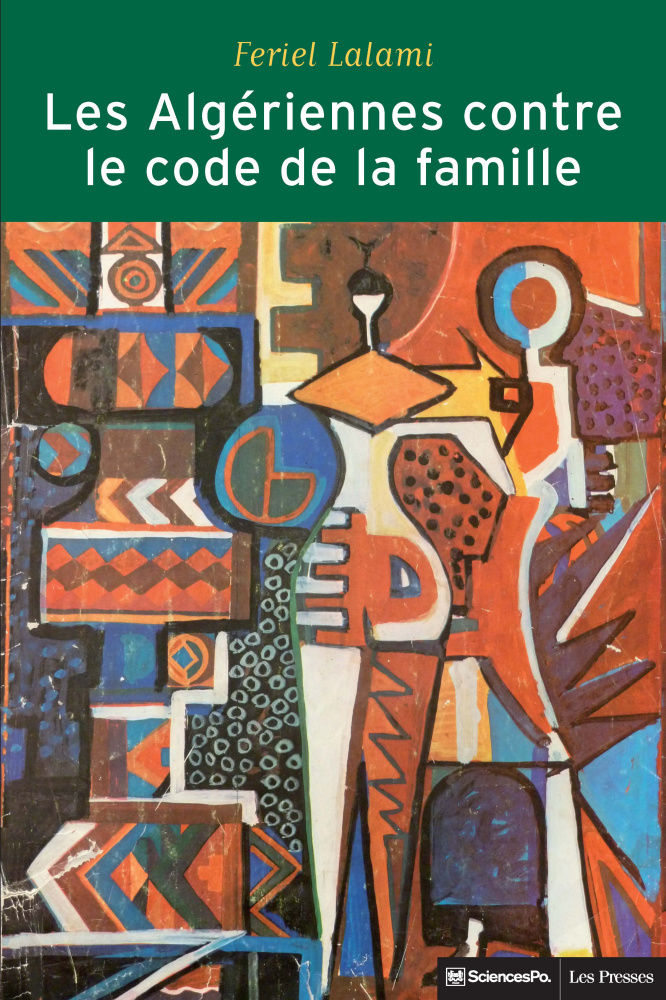
Les Algériennes contre le code de la famille
La lutte pour l'égalité
Première édition
Un récit au plus près de la lutte des Algériennes pour le changement de leur statut, ponctué d'interrogations sur les perspectives qui leur sont ouvertes depuis la révision en trompe-l’œil du code de la famille en 2005. Lire la suite
Loi discriminatoire promulguée en 1984, le code de la famille va à l'encontre de l'égalité entre les hommes et les femmes, promise pendant la lutte pour l'indépendance et énoncée par la Constitution. Il cristallise les actions menées par les Algériennes qui militent pour cette égalité.
Malgré un environnement politique fait d’obstacles et de contraintes – poids de la période coloniale qui a réduit le statut des femmes à un enjeu d’identité nationale ; limites imposées aux libertés publiques par un régime autoritaire ; cycle de violences extrêmes des années 1990 qui a paralysé l’activité politique et compromis la poursuite du mouvement – les associations ont toujours su, avec pragmatisme, trouver de nouvelles ressources, en particulier au niveau international.
Un récit au plus près de la lutte des Algériennes pour le changement de leur statut, ponctué d’interrogations sur les perspectives qui leur sont ouvertes depuis la révision en trompe-l’œil du code de la famille en 2005.
Disponible chez ce distributeur :

Spécifications
- Éditeur
- Presses de Sciences Po
- Auteur
- Feriel Lalami,
- Collection
- Académique
- Langue
- français
- Catégorie (éditeur)
- Internet Hierarchy > Science politique > Fait politique
- Catégorie (éditeur)
- Internet Hierarchy > Monde & sociétés > Maghreb
- Catégorie (éditeur)
- Internet Hierarchy > International
- Catégorie (éditeur)
- Internet Hierarchy > Politique
- Catégorie (éditeur)
- Internet Hierarchy > Société
- Catégorie (éditeur)
- Internet Hierarchy > Sociologie
- BISAC Subject Heading
- POL000000 POLITICAL SCIENCE
- BIC subject category (UK)
- H Humanities
- Code publique Onix
- 06 Professionnel et académique
- CLIL (Version 2013-2019 )
- 3283 SCIENCES POLITIQUES
- Crédit
- Presses de Sciences Po
- Date de première publication du titre
- 05 juin 2012
- Code Identifiant de classement sujet
- Classification thématique Thema: Politique et gouvernement
- Type d'ouvrage
- Monographie
- Avec
- Index, Bibliographie
- Langue originale
- anglais
Livre broché
- Date de publication
- 05 juin 2012
- ISBN-13
- 978-2-7246-1254-7
- Ampleur
- Nombre de pages de contenu principal : 362
- Code interne
- 978-2-7246-1254-7
- Poids
- 440 grammes
- Prix
- 25,00 €
- ONIX XML
- Version 2.1, Version 3
ePub
- Date de publication
- 05 juin 2012
- ISBN-13
- 978-2-7246-8924-2
- Contenu du produit
- Text (eye-readable)
- Code interne
- 9782724689242
- Protection technique e-livre
- DRM -Adobe
Google Livres Aperçu

Le combat des Algériennes pour un nouveau code de la famille, entre féminisme et syndicalisme
- Source
- propos recueillis par Camille Sarret
Les Algériennes contre le code de la famille
- Source
- Johanna GAUTIER
- http://www.cairn.info/revue-le-mouvement-social-20
Les Algériennes contre le code de la famille
- Source
- Marguerite Rollmde
Les Algériennes contre le code de la famille
Christophe Voilliot
Sommaire
LISTE DES SIGLES
GLOSSAIRE
INTRODUCTION
I - L'ORGANISATION AUTONOME DES FEMMES POUR L'ÉGALITÉ
Chapitre 1 / GENÈSE DU MOUVEMENT DES FEMMES
Le code de la famille : objet des luttes
Les prémices du militantisme associatif
Chapitre 2 / UN MOUVEMENT RADICAL ET PRAGMATIQUE
Organisation, revendications, méthodes et alliances
Les militantes
II - L'INSTITUTIONNALISATION DU MOUVEMENT DES FEMMES
Chapitre 1 / RECOMPOSITIONS POLITIQUES
Du combat contre les violences islamistes...
... au recentrage sur les revendications d'origine
Chapitre 2 / ENTRE INSTITUTIONNALISATION ET CONTRE-POUVOIR
Des associations devenues des ONG
Réactions à la révision et à l'application du code de la famille
CONCLUSION
ANNEXES
BIBLIOGRAPHIE
TABLE DES DOCUMENTS
Extrait
Interview de Feriel Lalami
-
La Fondapol a reçu pour son treizième Café de l’innovation Feriel Lalami pour partager un café autour de son ouvrage Les algériennes contre le code de la famille paru aux Presses de Sciences Po. Politologue et docteure en sociologie Feriel Lalami est
Événements précédents
Le algerine contro il codice della famiglia
Maria Letizia Perugini