
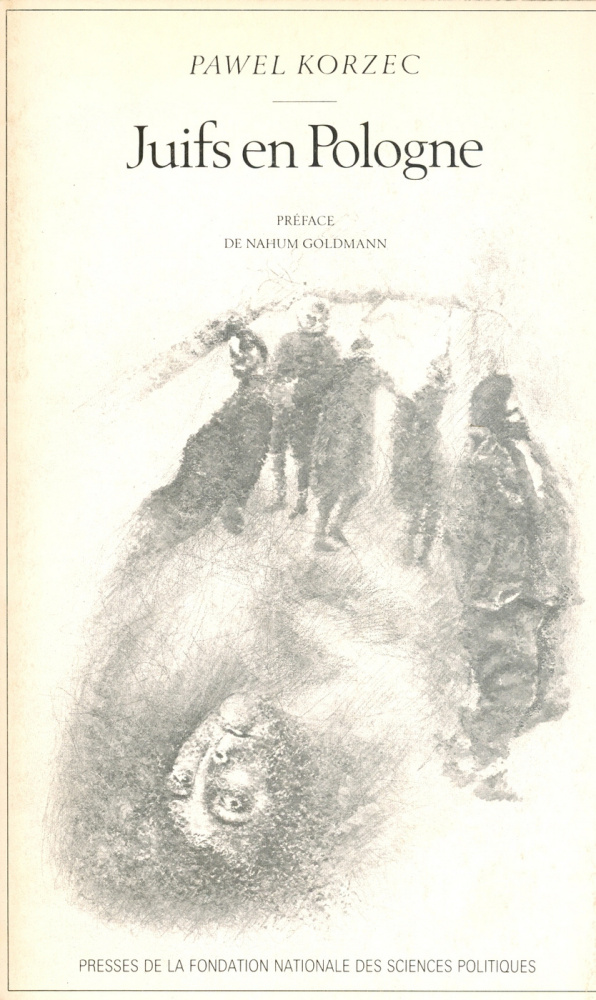
Juifs en Pologne
La question juive pendant l'entre-deux-guerres
First Edition
Des pogroms du début des années vingt aux réglementations racistes des années trente, la Pologne de l'entre-deux-guerres, tant celle de Paderewski que celle de Pilsudski, fera montre d'un antisémitisme pratique et actif qui a le triste privilège d'être bien antérieur aux lois de Nuremberg. Read More
Specifications
- Publisher
- Presses de Sciences Po
- Author
- Paweø Korzec,
- Collection
- Académique
- Language
- French
- Tags
- , , central and eastern Europe
- Publisher Category
- > Europe > European Countries
- Publisher Category
- > International field
- BISAC Subject Heading
- POL000000 POLITICAL SCIENCE
- Onix Audience Codes
- 06 Professional and scholarly
- CLIL (Version 2013-2019)
- 3283 SCIENCES POLITIQUES
- Title First Published
- 1980
- Subject Scheme Identifier Code
- Thema subject category: Politics and government
Paperback
- Publication Date
- 01 January 1980
- ISBN-13
- 978-2-7246-0440-5
- Extent
- Main content page count : 326
- Code
- 9782724604405
- Weight
- 430 grams
- List Price
- 15.50 €
- ONIX XML
- Version 2.1, Version 3
Google Book Preview
Contents
CHAPITRE 1 L'ÉVEIL POLITIQUE
Les relations polono-juives avant la restauration de la Pologne indépendante
CHAPITRE 2 LES GRANDES ESPÉRANCES
La création de l'État polonais (1918-1921)
CHAPITRE 3 L'ANTISÉMITISME « PARLEMENTARISÉ »
Stabilisation et démocratie parlementaire
CHAPITRE 4 L'ANTISÉMITISME TEMPÉRÉ
Le coup d'État de Pilsudski et le régime de la Sanacja (mai 1926-1930)
CHAPITRE 5 LES ILLUSIONS PERDUES
La dictature de Pilsudski (1930-1935)
CHAPITRE 6 LA CATASTROPHE IMMINENTE
la voix polonaise vers le nazisme (juin 1935-aout 1939)