
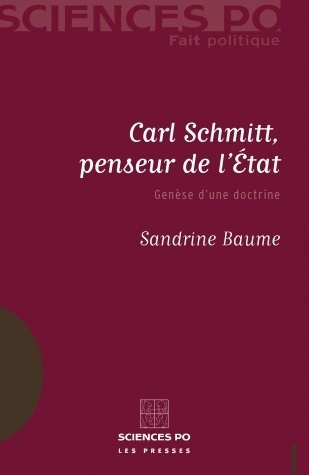
Carl Schmitt, penseur de l'État
Genèse d'une doctrine
First Edition
La doctrine de l'État de Carl Schmitt, souvent délaissée au profit d’autres facettes de son œuvre, constitue pourtant le lieu où s’incarnent ses théories du politique et de la Constitution. Read More
Carl Schmitt's doctrine of the State, often forsaken in favor of other facets of his work, still constitutes the place where his theories on politics and the Constitution are incarnate. Here the German legal practitioner describes the institutional overthrow experienced by the Germany of the 20th century. In 1914, he still thought of the State in terms of conformity to legality, just as during the fall of the empire, he did not consider state bodies except in the context of their use of judgement and their aptitude for confronting exceptional situations.
With a new perspective, starting with a systematic study of his writings regarding the State, this reference work relies on the political theology of Schmitt, his anti-individualism, as his unique definition of politics, to his propositions to remake institutions.
The reconstruction of his doctrine of the State, clarifies for a new era the confrontation between his followers and his adversaries and explains, despite the Carl Schmitt’s greedy compromises with Nazism, the persistance of his thinking in the intellectual world after Nuremberg.
Sandrine Baume teaches political philosophy and the history of political ideas at the University Lausanne.
Click here to buy from these retailers:


Specifications
- Publisher
- Presses de Sciences Po
- Author
- Sandrine Baume,
- Collection
- Académique
- Language
- French
- Publisher Category
- > History field > History by period
- Publisher Category
- > Political Science > Political facts
- Publisher Category
- > Political Science > Political Thought
- Publisher Category
- > History
- Publisher Category
- > Political Science
- Publisher Category
- > Politics
- BISAC Subject Heading
- POL000000 POLITICAL SCIENCE
- Onix Audience Codes
- 06 Professional and scholarly
- CLIL (Version 2013-2019)
- 3283 SCIENCES POLITIQUES
- Title First Published
- 14 January 2008
- Subject Scheme Identifier Code
- Thema subject category: Politics and government
Paperback
- Publication Date
- 26 October 2006
- ISBN-13
- 978-2-7246-3043-5
- Extent
- Main content page count : 180
- Code
- 9782724630435
- Binding
- Broché
- Dimensions
- 16 x 24 x 1 cm
- Weight
- 250 grams
- List Price
- 21.00 €
- ONIX XML
- Version 2.1, Version 3