
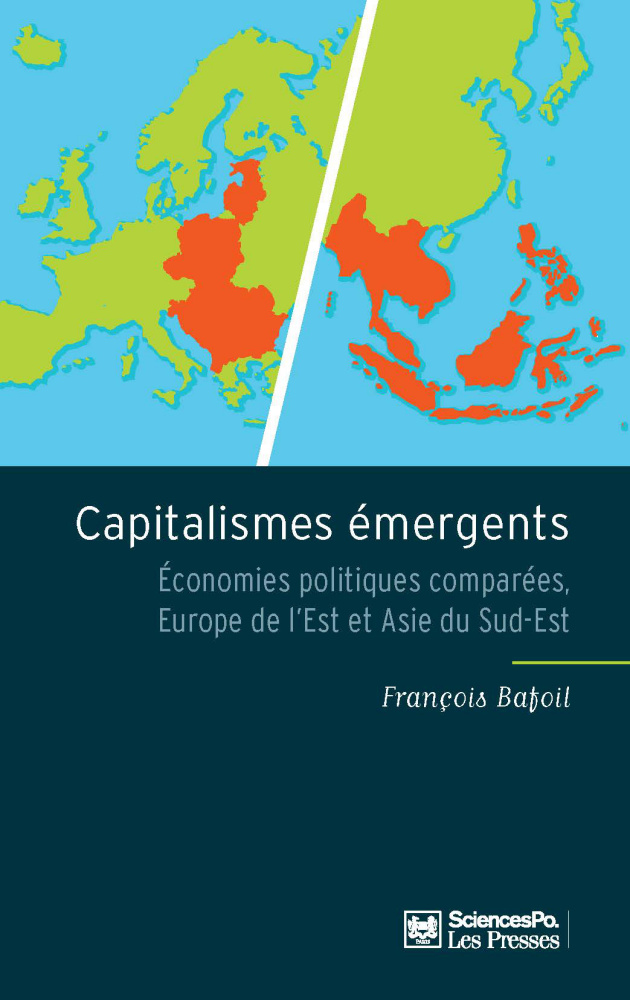
Capitalismes émergents
Économies politiques comparées, Europe de l'Est et Asie du Sud-Est
First Edition
A unique comparative history of South East Asian and Central European economies, before and after 1989, through the prism of different models of political domination. Read More
This is the first book to compare the political economies of different types of capitalism now emerging in Central Europe and South East Asia. It begins by observing that the countries of these two regions have certain things in common: occupied by colonial or imperial powers (with the exception of Thailand), they have experienced – or are still experiencing – dictatorial regimes (in some cases communist), and they belong to regional collective entities (UE and Asean) which essentially condition their development.
The author analyses their national heritage, often responsible for slow economic, political and social development. He estimates the consequences in relation to Western Europe and the founding members of Asean and shows how the resulting 'catch up' strategies attract as much foreign investment as possible by offering undemanding tax and social systems, to the point of deregulation.
A source of conflict between new and older members, with, as a result, the paralysis of several historical evolutions and a clear demonstration of the limits of collective management, these regional integrations have permitted the countries concerned to fortify their national sovereignty, present themselves as the defenders of widespread liberalism and zones of expansion for globalized trade.
A unique elucidation of the comparative history of South East Asia and Central Europe, before and after 1989, seen through the prism of different models of political domination and the construction of market trade.
Click here to buy from these retailers:


Specifications
- Publisher
- Presses de Sciences Po
- Author
- François Bafoil,
- Collection
- Académique
- Language
- French
- Tags
- , , , , Capitalism, central and eastern Europe
- Publisher Category
- > International > Asia
- Publisher Category
- > Political Economics > Economic Theory
- Publisher Category
- > International
- Publisher Category
- > International field
- Publisher Category
- > Political Economics
- Publisher Category
- > Politics
- Publisher Category
- > Society
- BISAC Subject Heading
- POL000000 POLITICAL SCIENCE
- Onix Audience Codes
- 06 Professional and scholarly
- CLIL (Version 2013-2019)
- 3283 SCIENCES POLITIQUES
- Title First Published
- 28 August 2012
- Subject Scheme Identifier Code
- Thema subject category: Politics and government
Paperback
- Publication Date
- 28 August 2012
- ISBN-13
- 978-2-7246-1260-8
- Extent
- Main content page count : 352
- Code
- 978-2-7246-1260-8
- Weight
- 600 grams
- List Price
- 28.00 €
- ONIX XML
- Version 2.1, Version 3
ePub
- Publication Date
- 28 August 2012
- ISBN-13
- 9782724688689
- Product Content
- Text (eye-readable)
- Extent
- Main content page count : 352
- Code
- 9782724688689
- Technical Protection ebook
- Adobe DRM
- ONIX XML
- Version 2.1, Version 3
Google Book Preview
Contents
PRÉSENTATION DE L'OUVRAGE
Capitalismes et économies politiques : idéaux types et variétés des réalités historiques
Plan de l'ouvrage
Chapitre 1 / EUROPE DE L'EST, ASIE DU SUD-EST
QUE COMPARE-T-ON ?
Bonnes et moins bonnes raisons de comparer
Fondements de la comparaison
Les différents groupes de pays en Europe de l'Est et Asie du Sud-Est
Conclusion
I - CAPITALISME DE MARCHÉ, COMMUNISME ET COLONIALISME
LES BUREAUCRATIES PATRIMONIALES
Introduction / COMPOSANTES POLITIQUES, SOCIALES ET ÉCONOMIQUES DES CAPITALISMES POLITIQUE ET DE MARCHÉ
Orientations intersubjectives et formes de domination politique
Dominations politiques et échanges économiques
Deux types de capitalisme : capitalisme politique et capitalisme de marché
Chapitre 2 / IDÉAUX TYPES ET ÉVOLUTIONS HISTORIQUES DU CAPITALISME
LES CATÉGORIES DE L'ÉCONOMIE POLITIQUE
Le marché
Les formes de la domination politique
La bureaucratie
Conclusion
Chapitre 3 / VALEURS ET RATIONALITÉ DANS UNE ÉCONOMIE DE COMMANDEMENT DE TYPE SOVIÉTIQUE
La triple irrationalité
Politique et morale
Conclusion
Chapitre 4 / ENFANCE ET PATRONAGE
FONDEMENTS DE LA DOMINATION PATRIMONIALE EN ASIE DU SUD-EST
Généalogie de la catégorie de patronage
La longue durée historique
Les relations interétatiques
Patronage, entente et consensus social
Conclusion
Chapitre 5 / UN CAS DE BUREAUCRATIE PATRIMONIALE
DANS LE SUD-EST ASIATIQUE
Dynamiques de domination coloniale
Périodicité et modes d’organisation
Les piliers de l’ordre nouveau : règle bureaucratique et mission civilisatrice
Les réformes du roi Chulalongkorn : la bureaucratisation par le haut
Quels héritages ? Les bureaucraties patrimoniales
Conclusion
II - CAPITALISMES POLITIQUES ET ÉTATS PRÉBENDIERS
Introduction / L'ÉTAT PRÉBENDIER
Qu’est-ce qu’un État prébendier ?
Figures politiques du charisme
Chapitre 6 / FIGURES DU CHARISME ET MARCHÉS MOBILISÉS SOUS LE COMMUNISME EST-EUROPÉEN
La production du désordre bureaucratique : la bureaucratie patrimoniale
Illusion et désordres des nouveaux marchés
Figures poststaliniennes du charisme soviétique
L’innovation gorbatchévienne
Une comparaison URSS-Chine
Conclusion
Chapitre 7 / LEADERSHIP AUTORITAIRE ET ÉTATS PRÉBENDIERS EN ASIE DU SUD-EST
Sarit Thanarat : le paternalisme despotique au service de la royauté
La politique économique de la dictature de Sarit Thanarat
Les acteurs cambodgiens
La stabilité du système cambodgien : réseaux et politique des bas salaires
Conclusion
III - LES MARCHÉS ÉMERGENTS
Introduction / LE MARCHÉ, UN CHAMP DE FORCES ENTRE INDIVIDUS LIBRES ET INÉGAUX
Chapitre 8 / LES LEÇONS DE L'UNION ÉCONOMIQUE ET SOCIALE ALLEMANDE
La violence de la monnaie : le transfert intégral du deutschmark le 1er juillet 1990
L’impossible transfert
L’ordre des diplômes et de la promotion sociale
La dépendance est-allemande
Conclusion
Chapitre 9 / LA PRIVATISATION DE L'ÉCONOMIE POLONAISE
LIBÉRALISME ET CROISSANCE DÉPENDANTE
Les positions politiques à l’égard de la privatisation
Héritages sectoriels et choix des privatisations
Groupes d’intérêts, conflits circonscrits et démobilisation sociale
Conclusion
Chapitre 10 / DU PLAN AU MARCHÉ OUVERT EN ASIE DU SUD-EST
La crise de régime
La privatisation ou nomenklatura capitalism
Conclusion
Chapitre 11 / TROIS CAS DE CAPITALISME POLITIQUE EN ASIE DU SUD-EST
RULE OF LAW, RULE BY LAW
Singapour
La Thaïlande
Le Vietnam
Conclusion
IV - CONSTRUIRE LES CAPITALISMES RÉGIONAUX
Introduction / FORCE ET FAIBLESSE DES ÉTATS ET DES RÉGIONS
Chapitre 12 / LES TERRITOIRES DES MARCHÉS
GÉOPOLITIQUE DES CAPITALISMES ÉMERGENTS
Délimitations territoriales et visions du développement
L’Asean : accords extérieurs et accords intérieurs
L’UE et la cohésion
Extension des capitalismes
Conclusion
Chapitre 13 / ÉTATS FORTS, ÉTATS FAIBLES RÉGIONS FORTES, RÉGIONS FAIBLES
Cohérence des politiques publiques
Les variables externes : les multinationales
L’Asean et les pays du Sud-Est asiatique
L’UE et les pays d’Europe centrale et orientale
Conclusion
Chapitre 14 / LA FORCE DES FAIBLES
Pourquoi l’UE et l’Asean se sont-elles élargies ?
Les avantages d’être intégré
La limite de tout hégémonisme
Extension du libéralisme et flexibilité du travail
Conclusion
CONCLUSION GÉNÉRALE
Les capitalismes politiques
Capitalisme de marché et État de droit