
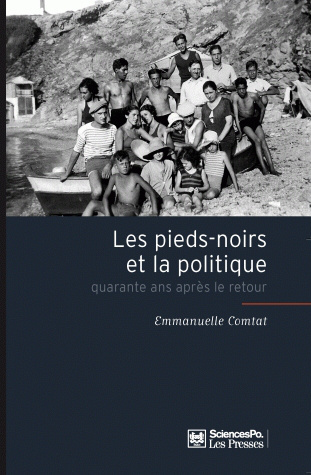
Les pieds-noirs et la politique
Quarante ans après le retour
First Edition
An analysis of the political behavior of the pieds-noirs (French colonials born in Algeria) from 1871 to 2002, in light of the trauma of the Algerian war and their subsequent return to France. Read More
Emmanuelle Comtat provides a better understanding of how the pieds-noirs view themselves today, including an exploration of the degree of trauma remaining within their collective psyche almost fifty years after the Algerian war. The book also delves into what impact these events continue to have on the political attitudes of the pieds-noirs. It reveals how the children of these returning populations, aware of the trauma their parents lived through, have since determined how they will move on.
A book which fills a considerable void in the history of the Fifth Republic, describing a predominantly misunderstood community, it is also an important contribution to the analysis of the transmission of past trauma.
Emmanuelle Comtat is a doctor of political science, and has been teaching at l'Institut d’études politiques de Grenoble since 2003.
Click here to buy from these retailers:


Specifications
- Publisher
- Presses de Sciences Po
- Author
- Emmanuelle Comtat,
- Collection
- Académique
- Language
- French
- Tags
- , , , , , , , ,
- Publisher Category
- > Sociology > Electoral Sociology
- Publisher Category
- > History field > History by period
- Publisher Category
- > History field > History by subject
- Publisher Category
- > Political Science > Political facts
- Publisher Category
- > Sociology > Political Sociology
- Publisher Category
- > History
- Publisher Category
- > History field
- Publisher Category
- > Politics
- BISAC Subject Heading
- POL000000 POLITICAL SCIENCE
- BIC subject category (UK)
- H Humanities
- Onix Audience Codes
- 06 Professional and scholarly
- CLIL (Version 2013-2019)
- 3283 SCIENCES POLITIQUES
- Title First Published
- 30 November 2009
- Subject Scheme Identifier Code
- Thema subject category: Politics and government
- Type of Work
- Monograph
- Includes
- Index, Bibliography
- Original Language
- English
Paperback
- Publication Date
- 30 November 2009
- ISBN-13
- 978-2-7246-1138-0
- Extent
- Main content page count : 320
- Code
- 978-2-7246-1138-0
- Weight
- 386 grams
- List Price
- 28.50 €
- ONIX XML
- Version 2.1, Version 3
ePub
- Publication Date
- 30 November 2009
- ISBN-13
- 9782724687231
- Extent
- Main content page count : 320
- Code
- 9782724687231
- Technical Protection ebook
- Adobe DRM
- ONIX XML
- Version 2.1, Version 3
Google Book Preview
Contents
Chapitre I / LES COMPORTEMENTS POLITIQUES AVANT ET PENDANT LA GUERRE D'ALGÉRIE
Les Français d'Algérie : une population spécifique
Des comportements politiques hétéroclites
Conclusion
Chapitre 2 / LES ÉLÉMENTS CONSTITUTIFS DU TRAUMATISME
Le sentiment d'être abandonnés
La perte de l'Algérie et les conditions du retour en France
Devoir reconstruire sa vie en France
Transmission éventuelle du traumatisme du rapatriement
Conclusion
Chapitre 3 / L'INTÉGRATION EN FRANCE
L'entraide et la solidarité au sein du groupe
Une insertion socio-économique plutôt réussie
Conclusion
Chapitre 4 / PARTICIPATION ET POLITISATION DEPUIS 1962
La participation
La politisation
Conclusion
Chapitre 5 / L'ORIENTATION POLITIQUE DEPUIS 1962
Positionnement gauche-droite et proximité partisane
Le rejet des partis politiques de gauche
Un positionnement marqué à droite
Entre attirance et répulsion à l'égard du FN
Expression du traumatisme en politique
Conclusion