
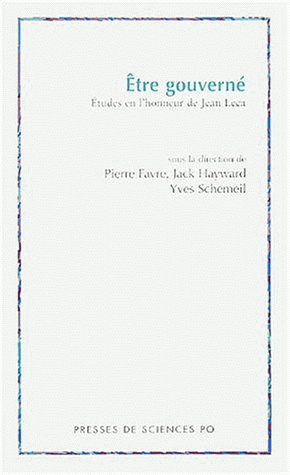
Etre gouverné
Etudes en l'honneur de Jean Leca
First Edition
Every person is subjected to a governmental power in varying degrees. But the fact of being governed cannot be analyzed in its generality and complexity if only the recipients of public action are looked at. The ways of governing and the many ways that public policies are defined and used engage different relations among those governed and those who govern. Both exist in the closed field of the State whose place in social relations always has to be reexamined again. In what ways can these men and women who are governed be grasped? How are they governed? Are they really governable? Should the state be held at bay, reinvested, gone beyond? These are the questions addressed in this book.
Paperback
- In French
33.50 €
ePub (EPUB)
- In French
4.99 €
Click here to buy from these retailers:


Click here to buy from these retailers:
Specifications
- Publisher
- Presses de Sciences Po
- Author
- Pierre Favre, Yves Schemeil,
- Collection
- Académique
- Language
- French
- Tags
- , Governance
- Publisher Category
- > Europe > European Politics
- Publisher Category
- > International field
- Publisher Category
- > Politics
- BISAC Subject Heading
- POL000000 POLITICAL SCIENCE
- Onix Audience Codes
- 06 Professional and scholarly
- CLIL (Version 2013-2019)
- 3283 SCIENCES POLITIQUES
- Title First Published
- 2003
- Subject Scheme Identifier Code
- Thema subject category: Politics and government
Paperback
- Publication Date
- 01 January 2003
- ISBN-13
- 978-2-7246-0911-0
- Extent
- Main content page count : 376
- Code
- 978-2-7246-0911-0
- Weight
- 430 grams
- List Price
- 33.50 €
- ONIX XML
- Version 2.1, Version 3
ePub
- Publication Date
- 01 January 2003
- ISBN-13
- 9782724686364
- Product Content
- Text (eye-readable)
- Extent
- Main content page count : 376
- Code
- 9782724686364
- Technical Protection ebook
- Adobe DRM
- ONIX XML
- Version 2.1, Version 3